
Today's Moment
About Mass MomentsContact
Massachusetts Foundation for the Humanities
TimelineMap

Radio Moment
[play] [download]

Need help with audio file?

Listen to Mass Moments
on the radio.

Source Document

Will, 1870

Links

The Five College Digital Archive Project website has a variety of primary sources on the early history of Smith.

Online exhibit produced for the centennial of Sophia’ Smith’s birth in 1796.

If You Go

Smith College is in Northampton, 100 miles due west of Boston.

Sophia Smith's birthplace and longtime home at 22 Main Street in Hatfield is now a private residence.


Mass Moment Regions

Map

This Mass Moment occurred in the Western region of Massachusetts.
 

Discussion Board

Discuss this and other Mass Moments on our discussion board.

There are currently 9 posts on this moment.

Most recent post on:
04/24/2011 22:56
 

Find related moments by category:

Education
Firsts
Women's History

eMoments

Receive the daily Mass Moment in your email.
Sign up for eMoments.
 

Receive the daily
Mass Moment as a
Podcast or RSS Feed.
 

Sophia Smith Endows New Women’s College
Image Credit 

On This Day...
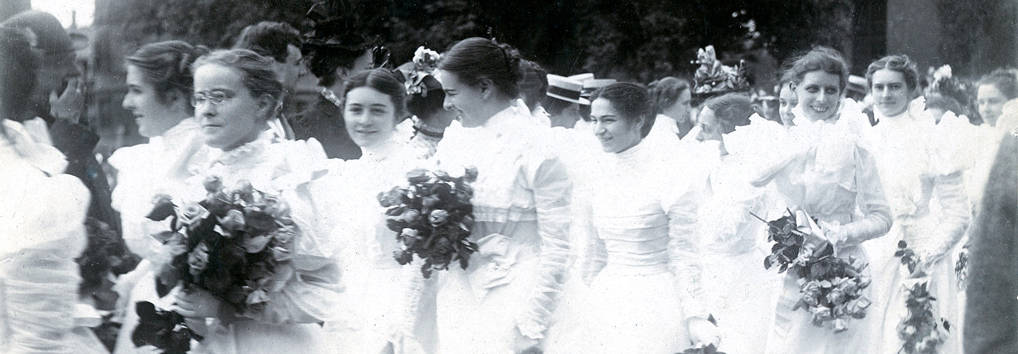
      ...in 1870, a shy but determined woman from Hatfield willed that her fortune be used to establish a women's college in Northampton. The first woman in America to endow a college for women, Sophia Smith was not a social crusader, but she did believe that women's power for good would "be incalculably enlarged" by higher education. Like other women's colleges, Smith was considered a dangerous experiment. Many people feared that rigorous study would endanger women's health and their prospects for marriage. In 1876, at the close of the college's first year, all 14 of the students were reported to be in good health. Equally important, they had "accomplished as much work as in a college attended only by males."

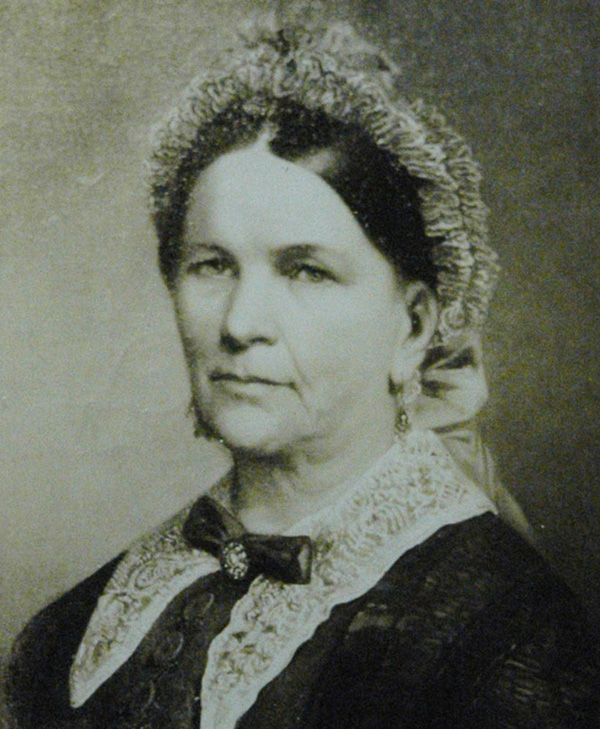
When Sophia Smith, the last surviving member of a wealthy Connecticut Valley family, died in 1870, she left her fortune to endow a new college for women. Smith believed that by giving women access to higher education, "what are called their 'wrongs' will be redressed, their wages will be adjusted, their weight of influence in reforming the evils of society will be greatly increased." Although she stated clearly that she did not wish "to render my sex any the less feminine," her idea of giving women an education equal to men was a daring one.

Unlike Mary Lyon, the founder of Mt. Holyoke Seminary in nearby South Hadley, Sophia Smith was not a social reformer or educator. Her father was a prosperous farmer prominent in town affairs. Educated mostly in the local schools, she was always an avid reader. She never married and rarely ventured far from home, especially after she lost her hearing at the age of 40. She lived in the house where she was born with her unmarried sisters and brother. When the last of them died in 1861, she found herself a very wealthy woman.

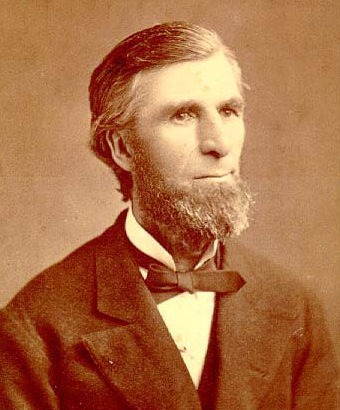
She turned to her young pastor, John Morton Greene, a graduate of Amherst College, for guidance. Greene and his wife, who had attended Mt. Holyoke, both believed education was the key to salvation. Vassar College had just been chartered, but there was still no true college for women in New England. Sophia Smith had sorely missed attending such a college, and she decided to endow one.

John Greene prepared a "Plan for a Woman's College," which Smith incorporated into her will. She explained that her intention was "to develop as fully as may be the powers of womanhood & furnish women with means of usefulness, happiness, & honor now withheld from them." Greene proposed to do this not in a seminary or a teacher preparatory school but by establishing "an institution for the higher education of young women, with the design to furnish them means and facilities for education equal to those which are afforded in our colleges to young men."

Greene's plan emphasized the importance of providing women with a curriculum equal to that available to men. At the opening exercises, the president of the school's trustees explained that this was "to be a college, a whole college, and nothing but a college—not a preparatory school, or a young ladies' seminary. . . . It would be a college to educate the whole woman as other colleges trained the whole man."

There has long been a question as to how active a role Sophia Smith played in shaping what was essentially the vision of John Green and the men he enlisted to help him. While Smith has been described as yielding and submissive, her interest in women and their academic aspirations was genuine and long-standing.

She was persuaded that the air of her beloved Hatfield was unhealthful and that the new college should be built in neighboring Northampton, which had the advantage of being a larger and more accessible town. Disappointed Hatfield residents protested that Smith was not of sound mind when she made this provision, but their efforts to overturn the terms of the will failed.

Once the location was secure, serious financial challenges lay ahead. The trustees soon discovered that Smith's $390,000 bequest was not enough to implement the plan. They engaged a fundraiser to visit "friends of women's education" in eastern Massachusetts, where they expected to find supporters—and donors—for their project.

They also appealed to the people of Northampton to contribute $70,000 towards the cost of constructing the first building. The college would be the pride of the town, "A college of high character is such a benefit to every interest of a town and community," they argued, "that it is just and right that people even make a sacrifice to secure it. How many families of taste and refinement, and wealth, it will cause to enter here? What an element of culture it will introduce into our social life?"

The next serious challenge was to assemble a student body qualified to study a liberal arts curriculum as demanding as those at male colleges, with courses in classics, modern languages and literature, mathematics, and natural sciences. To gain admission, students had to pass examinations in geography, English, Latin, and Greek grammar and literature, arithmetic, algebra, and geometry. Very few young women were prepared for such a rigorous admission process; 14 entered with the first class in 1875.

The greatest controversy surrounded the very idea of higher education for women. As colleges began to accept women, commentators worried that it would "unfit women for domestic life"; others feared that advanced study would ruin a woman's health.

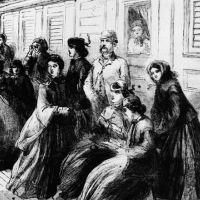
There were also concerns about women living outside the sphere of family influence. One contributor to Scribner's Magazine insisted that "no consideration would induce us to place a young woman—daughter or ward—in a college which would shut her away from all family life for a period of four years. The system is unnatural, and not one young woman in ten can be subject to it without injury. . . . There is no reason for exposing hundreds of girls to the perils of college life as they at present exist."

The Smith trustees responded by deciding to "erect a number of smaller dwelling-houses around a central academic building. Each forms a separate establishment with its own domestic life." A "lady-in-charge" and a female faculty member resided in each house.

At the end of the first year, the college proudly reported that "the standard of study has been well maintained." Equally important, "there has been no sickness among the students living in the college boarding house."

Smith College has been a nationwide leader in women's liberal arts education for over 125 years. Among its many distinguished alumnae are Barbara Bush, Julia Child, Betty Friedan, Madeleine L'Engle, Margaret Mitchell, Nancy Reagan, and Gloria Steinem.

Sources

Alma Mater: Design and Experience in the Women's Colleges from Their Nineteenth-Century Beginnings to the 1930s, by Helen Lefkowitz Horowitz (Beacon Press, 1984).

Hampshire Gazette, November 5, 1872 and July 24, 1877

"Sophia Smith" online at Historic Northampton

"Sophia Smith," Dictionary of American Biography

"Sophia Smith," in Notable American Women, Vol. III.

Springfield Daily Union, July 6, 1875


Discuss This Moment on Our Message Board
Recent Posts: New Topic  |   Search
Topic Originator Views Replies Most Recent Post
John M. Green dryadsgreen 740 3 04/24/2011 22:56
by Anonymous
Barbara Bush Grace Hoag 1010 4 04/24/2011 22:56
by Anonymous
 
Other discussions about this Moment: [go]

Discussion on other Moments: [go]
 
Teachers' Features
This past week's MomentsSundayMondayTuesdayWednesdayThursdayFridaySaturday
Massachusetts Foundation for the Humanities

©2012 Massachusetts Foundation for the Humanities. All rights reserved.