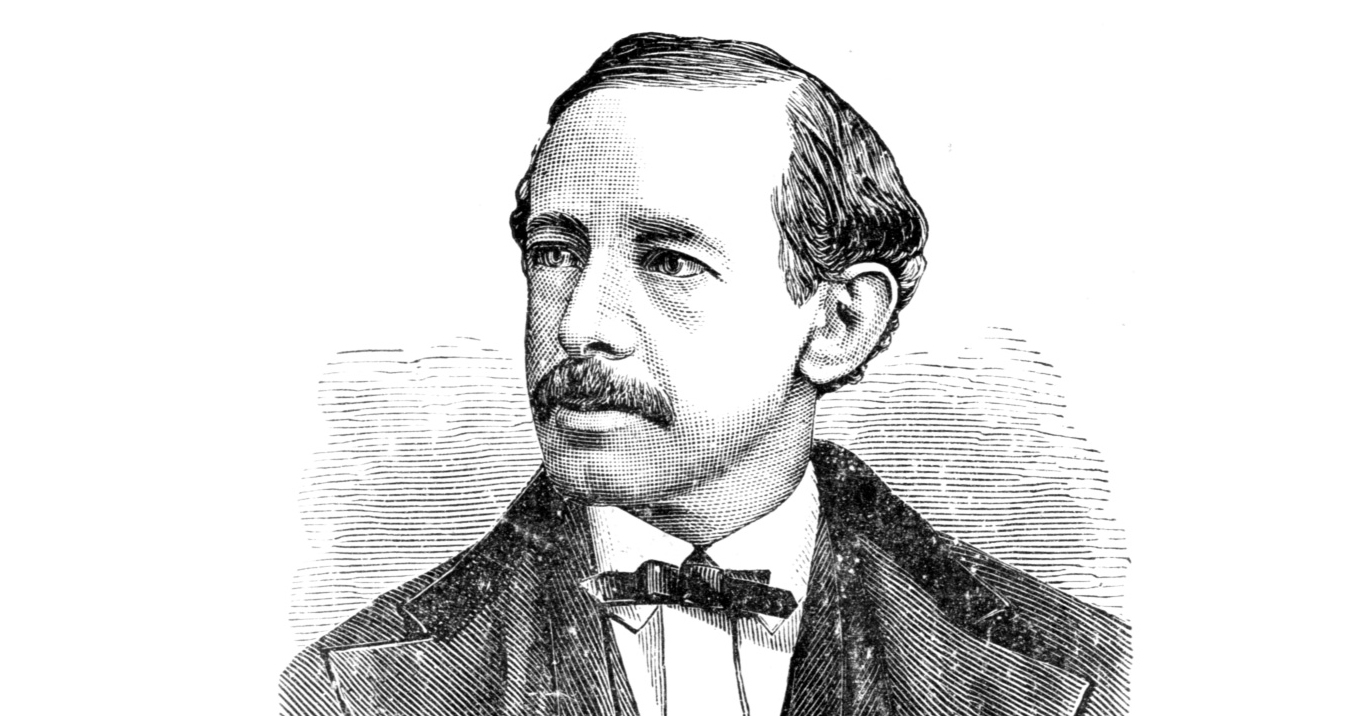

Horatio Alger made his name as the nation's leading writer of "rags to riches" tales. In over 70 stories published during his lifetime, he taught American boys growing up after the Civil War that virtuous behavior would be rewarded by respect and prosperity. His heroes did not rise to positions of great power and wealth in the manner of a Rockefeller or a Carnegie. They earned respectability and financial security by working hard, using their wits, and treating others with kindness.
Horatio Alger was born and raised in Revere, Massachusetts, a farming village just north of Boston that was then called North Chelsea. His father, a Unitarian minister, insisted that the boy study classics at an early age and follow him into the ministry. Horatio was small and timid taunting classmates nicknamed him "Holy Horatio" but he was also very bright. He entered Harvard in 1848 and excelled as a student. To his father's dismay, he was more interested in literature than theology. When he read the recently published Moby-Dick, he was inspired to imagine that he, too, might become an author. He began writing and succeeded in publishing several novels in the years after college.
Rev. Alger did not give up his plan for his eldest son to become a minister. Horatio reluctantly attended Harvard Divinity School. He was ordained and installed as minister of the Unitarian Church in the Cape Cod village of Brewster in December of 1864.
His tenure there was short. In early 1866, rumors surfaced that the young clergyman was molesting boys. Two youths came forward with tales of seaside picnics where Alger had "practiced on them." Confronted by the boys' parents and church authorities, Alger did not deny the allegations. He resigned his pulpit and returned to live with his parents, who, by then, had moved to Natick. After receiving assurances that Horatio Alger would leave the ministry, church officials and the boys' parents agreed not to file charges. There is no evidence that he ever again engaged in pedophilia, but his life's work on behalf of homeless boys may have been an effort to expiate his earlier guilt.
With the scandal suppressed, Alger moved to New York City. In the late 1860s and 1870s New York was teeming with poor, homeless, and orphaned youngsters. Horatio Alger was moved by their plight. The first story he published in New York, Ragged Dick, portrayed the struggles of a homeless young bootblack to survive on the streets. Dick's intelligence and spirit attract the attention of a generous man of means. With the help of his benefactor, Dick becomes a respected and successful businessman.
When a popular boys' magazine published Ragged Dick in installments, it attracted wide attention. One man who sought the author out was Charles O'Connor, the superintendent of the Newsboys' Lodging House. Over the next 30 years, O'Connor would give Alger a home, unwavering friendship, and, when times were hard, financial support. Alger served as chaplain for the Newsboys' Lodge and helped to support the institution with income from his books.
Alger gave aid and assistance to many poor boys in New York. When he had the money, he helped a number of them work their way out of poverty, just as the benefactors in his stories did. Alger's involvement with poor children gave him material for his stories, which he produced at a rapid and steady pace.
His tales all had the same basic plot. A fatherless boy from a New England village runs away to the city after escaping from a greedy and abusive man, who occupies a position of power in the community. The boy's kindness and bravery are noticed by a wealthy, single or widowed man. The gentleman either bestows a modest fortune on the boy or helps to establish him in business. Success achieved, the hero returns to his village and rescues his poor widowed mother.
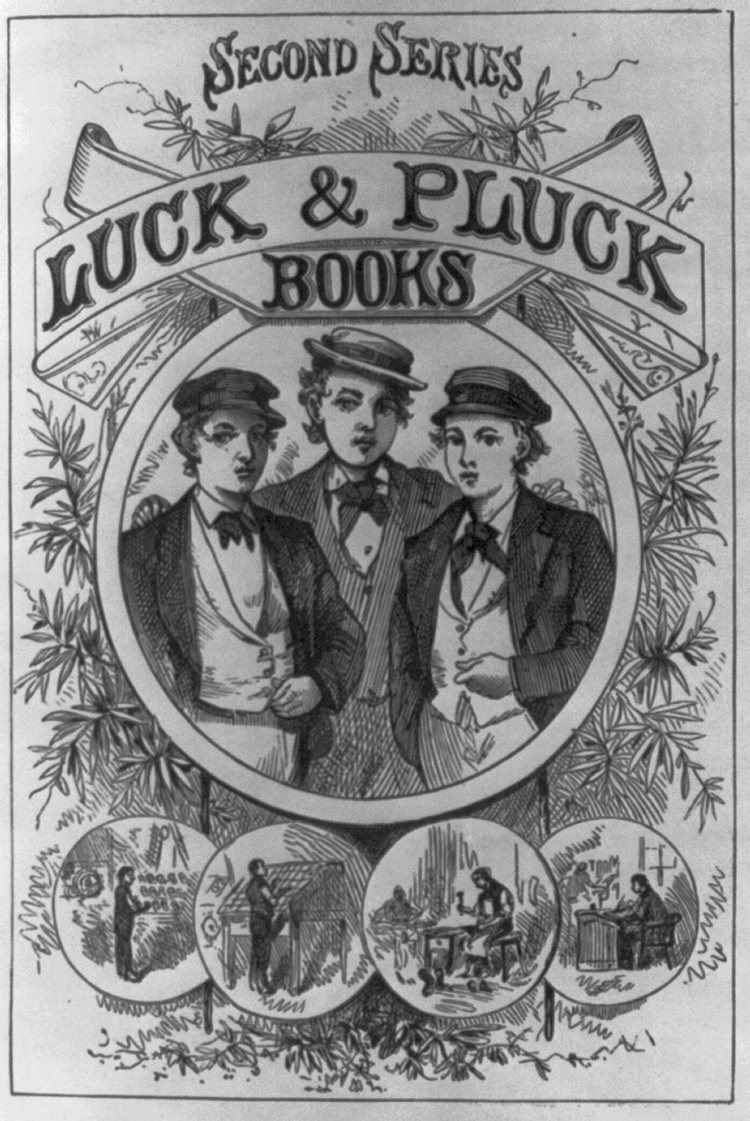
At the time they were written, and for many years afterwards, Alger's stories were seen as realistic descriptions of how the poorest boy could make good in America. All he needed to do was work hard and avoid idleness, alcohol, and undesirable company and he could achieve respectability and security. Boys loved the books, and parents approved of the message they conveyed. Horatio Alger's stories were so well loved that for nearly 40 years boys collected his books and swapped them like trading cards. He received letters from thousands of boys, seeking his advice.
Critics have pointed out that Alger's heroes were not truly self-made men, since they usually benefited from the generosity of a stranger-benefactor. Alger's tales are better understood as a reflection of his desire to find a loving, beneficent substitute for his own domineering father. In many ways, Horatio Alger never really grew up. He remained dependent on his friend Charles O'Connor until, in his final illness, he returned to Massachusetts to be nursed by his sister. He died in Natick in 1899.
Unlike the heroes he created, Alger had little success in business; he struggled financially in spite of how well his books sold. He was so generous with others that by the end of his life he had nothing left for himself. Shortly before he died in 1899, he even sold the right to his name. Many Horatio Alger tales were published in the years after his death.
*1832
Sources
The Lost Life of Horatio Alger, Jr. by Gary Scharnhorst with Jack Bales (Indiana University Press, 1985).
"The Real Horatio Alger Story," in New England Writers and Writing by Malcolm Cowley (University of New England Press, 1996).
Unitarian Universalist Association biography online at http://www.uua.org/uuhs/duub/articles/horatioalgerjr.html